Airspace
What Is the Mode C Veil? The 30-Mile Ring and Why It Matters to Drone Pilots
A solid magenta circle 30 nautical miles wide surrounds every Class B primary airport. It is not an authorization boundary, and a Part 107 drone is banned from carrying the equipment it requires.
Key takeaway
Crossing into the Mode C veil requires nothing from you. It is a transponder rule for manned aircraft, not an airspace authorization, and Part 107 actually prohibits your drone from carrying a transponder or ADS-B Out.
The Mode C veil is the airspace within 30 nautical miles of an airport listed in appendix D, section 1 of 14 CFR part 91 — in practice, the primary airport of a Class B area — extending from the surface up to 10,000 feet MSL. Aircraft inside it must carry an operable altitude-reporting transponder and ADS-B Out. Your drone is not one of them.
That last sentence is where most drone pilots get this wrong, and they get it wrong in both directions. Some see the big magenta circle on the sectional, assume it is an airspace boundary like the Class B rings inside it, and request an authorization they do not need. Others learn the veil is "not for drones" and stop thinking about it entirely, which throws away the most useful thing the ring tells you.
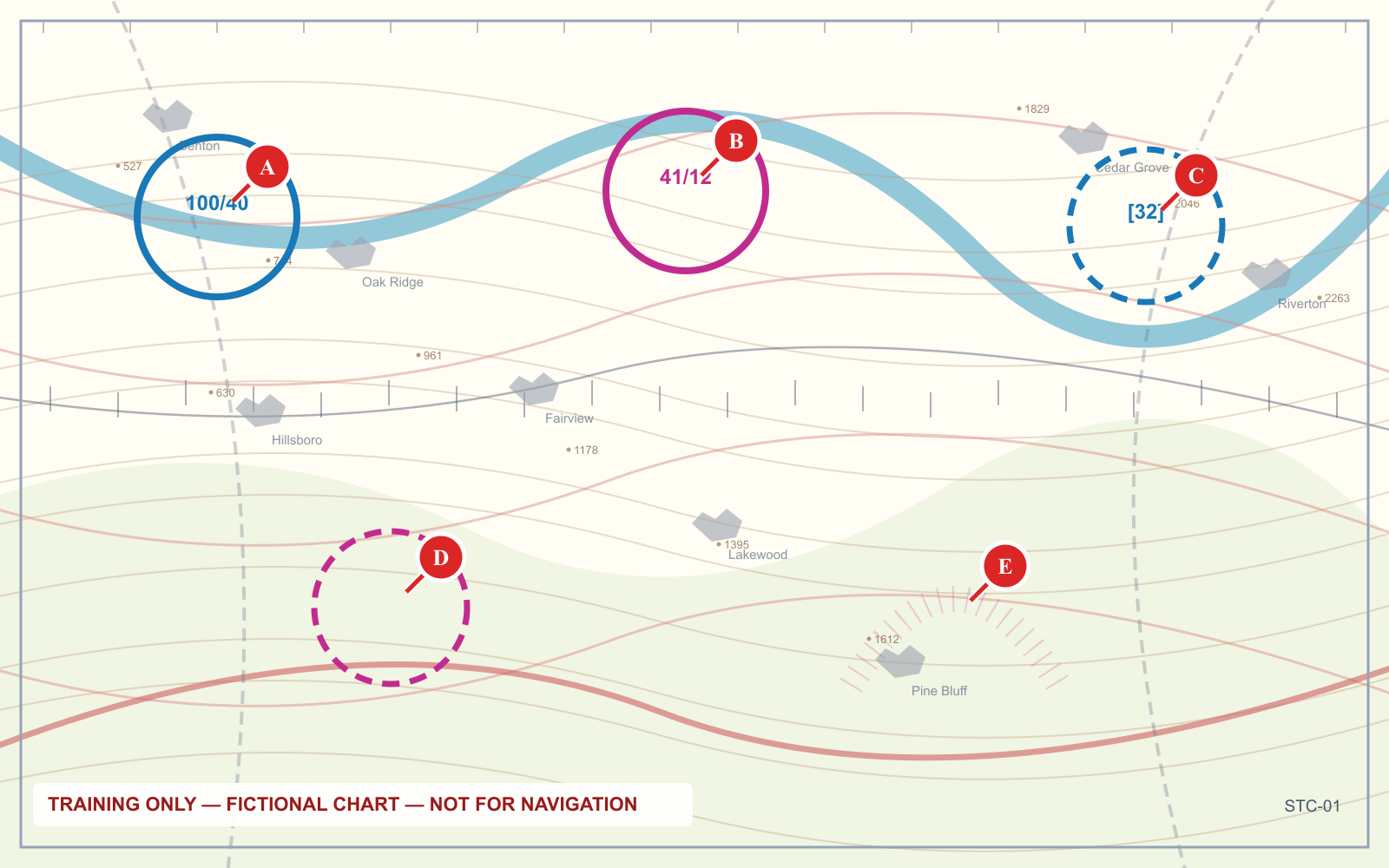
What is the Mode C veil?
It is a transponder requirement drawn as a circle. The FAA's Aeronautical Information Manual defines it as the airspace within 30 nautical miles of an airport listed in appendix D, section 1 of part 91, generally the primary airports within Class B airspace areas, from the surface upward to 10,000 feet MSL.
Notice what the definition does not contain. There is no clearance requirement, no communication requirement, and no entry restriction. The veil says one thing: if you are flying in here, ATC's radar needs to know your altitude automatically.
That makes it a different category of thing from every other circle on your chart. Class B, C and D are airspace classes carrying entry rules. The Mode C veil is an equipment rule that happens to have a shape.
The rule, exactly as written
Section 91.215(b) requires an operable coded radar beacon transponder with automatic pressure altitude reporting in five places. The veil is only one of them:
| Where | The requirement |
|---|---|
| Class A, B and C airspace areas | Transponder with Mode C |
| Within 30 NM of an appendix D, section 1 airport, surface to 10,000 feet MSL | Transponder with Mode C — this is the veil |
| Above the ceiling and within the lateral boundaries of Class B or Class C, up to 10,000 feet MSL | Transponder with Mode C |
| At and above 10,000 feet MSL in the 48 contiguous states, excluding airspace at and below 2,500 feet AGL | Transponder with Mode C |
| Surface to 10,000 feet MSL within 10 NM of an appendix D, section 2 airport | Transponder with Mode C |
Since 1 January 2020, 14 CFR 91.225 has layered ADS-B Out on top of most of that, including paragraph (d)(2), which repeats the veil's dimensions word for word. This is why current charts label the ring MODE C & ADS-B OUT rather than just Mode C. The name stuck from the older rule.
Why is the Mode C veil of interest to remote pilots?
This is close to the phrasing the knowledge test uses, and the answer is not "because you need a transponder." It is about what the circle tells you is happening overhead.
The veil is drawn at 30 nautical miles because that is roughly the radius inside which airliners are descending, configuring and joining final for a major airport. Below the Class B shelves, where the floor might be 4,000 or 3,000 feet, that traffic is funneled into the same corridors at the same altitudes day after day. The FAA drew a circle around the sky where it wanted every target tagged with an altitude, and in doing so it drew you a map of where manned traffic is densest.
You are at 400 feet or below, so nothing in the veil is legally aimed at you. But the helicopter traffic, the flight training, and the general aviation aircraft threading below Class B to avoid a clearance are all concentrated inside that ring. Being inside the veil is a reason to raise your scan, brief your visual observer more carefully, and think harder about where a low aircraft could come from. That is the answer the exam is reaching for.
Does a Part 107 drone need a transponder or ADS-B Out?
No. It is worse than "no" — it is prohibited.
Section 91.215 governs aircraft operating under part 91. You are operating under part 107, and part 107 contains two rules pointing the opposite way:
- 14 CFR 107.52 — "Unless otherwise authorized by the Administrator, no person may operate a small unmanned aircraft system under this part with a transponder on."
- 14 CFR 107.53 — "Unless otherwise authorized by the Administrator, no person may operate a small unmanned aircraft system under this part with ADS-B Out equipment in transmit mode."
Both were added in January 2021 by the same rulemaking that produced Remote ID. The reasoning is capacity. There are far more drones than manned aircraft, and if they all began transmitting on the same surveillance frequencies they would saturate the system and bury the targets controllers actually need to separate. Remote ID solves identification for drones without touching that spectrum.
So the veil requires equipment your aircraft is banned from operating. The requirement simply does not reach you.
How the veil looks on a sectional, and what it is not
The FAA Aeronautical Chart User's Guide is specific: Mode C required airspace within a 30 NM radius of the primary airport of a Class B is depicted by a solid magenta line, labeled MODE C & ADS-B OUT 30 NM. On IFR enroute low altitude charts the same ring is blue. On your sectional it is magenta.
Here is the trap. You already learned that a solid magenta ring means Class C. Now there is a second solid magenta ring meaning something entirely different. Tell them apart by size and by content:
| Class C ring | Mode C veil ring | |
|---|---|---|
| Color and style | Solid magenta | Solid magenta |
| Typical radius | 5 NM core, 10 NM shelf | 30 NM |
| Labeled with | Boxed altitude fractions, e.g. 41/12 | MODE C & ADS-B OUT 30 NM |
| Centered on | A Class C airport | A Class B primary airport |
| Does it need authorization for a drone? | Yes | No |
The size difference settles it in practice. A veil ring is enormous. It usually runs off the edge of whatever section of chart you are looking at, and it encloses the Class B rings rather than sitting beside them.
Two more depiction facts, both straight from the Chart User's Guide. Mode C is required within and above all Class C up to 10,000 feet MSL, but that requirement is not depicted. Neither is the enroute requirement at and above 10,000 feet MSL. Absence of a magenta ring does not mean absence of a transponder requirement. For more on separating the magenta lines from the blue ones, see how to read a sectional chart.
Why the veil exists
On 31 August 1986 a Piper Archer collided with Aeroméxico Flight 498, a DC-9 descending into Los Angeles, over the suburb of Cerritos, California. Everyone aboard both aircraft died, along with people on the ground. The Archer had entered the Los Angeles terminal control area without a clearance, and controllers had no automatic altitude information on it.
The response reshaped low-altitude surveillance. Airliners got TCAS, and the FAA created what is now the Mode C veil, so that light aircraft near the busiest airports would report altitude automatically whether or not anyone was talking to them. That history is why the ring is a traffic-density signal rather than a bureaucratic line. It marks where the FAA concluded, at real cost, that a midair was most likely.
The exceptions
Section 91.215(b)(3) carves out aircraft that were never certificated with an engine-driven electrical system, along with balloons and gliders. Those may operate inside the veil provided they stay outside any Class A, B or C airspace, and below the ceiling of the Class B or Class C area or 10,000 feet MSL, whichever is lower.
That is why you may see a Cub, a glider or a balloon operating inside the ring with nothing transmitting. They are legal, and they are a warning: not every aircraft inside the veil is visible to ATC, so "the tower would see them" is not a safety argument you can lean on.
What this means when you are actually working
Strip it down to three decisions.
Does the ring change your authorization? No. If you are inside the veil but outside Class B, C, D and any Class E surface area, you are in Class G or overlying Class E and may launch without asking anyone. Requesting LAANC because you saw the magenta circle is a common and needless step. Check the airspace class underneath you, which is what the airspace classes guide walks through.
Does the ring change your risk? Yes. Treat it as a standing advisory that manned traffic overhead is heavier and lower than the chart's airspace shading alone suggests, particularly under Class B shelves along arrival corridors.
Does the ring change your equipment? No, in the strictest sense: sections 107.52 and 107.53 mean the correct configuration inside the veil is the one you use everywhere else, with any transponder or ADS-B Out transmitter switched off.
Frequently asked questions
Does Class C airspace have a Mode C veil?
No. Only the primary airports of Class B areas get a charted 30 NM veil. A transponder with Mode C is still required within and above Class C airspace up to 10,000 feet MSL under 14 CFR 91.215(b), but the FAA does not depict that requirement with a ring, so no circle appears on the chart around a Class C airport.
Do I need a transponder above 10,000 feet MSL?
Under 14 CFR 91.215(b)(5), a transponder with Mode C is required at and above 10,000 feet MSL throughout the 48 contiguous states, excluding airspace at and below 2,500 feet above the surface. That requirement is not charted. It is also irrelevant to Part 107, which caps you at 400 feet AGL.
Is the Mode C veil the same as Class B airspace?
No. The veil is a 30 NM equipment requirement running from the surface to 10,000 feet MSL. Class B is a separate airspace class with tiered shelves and its own entry rules. The veil generally extends well beyond the outer Class B ring, so most of the area inside a veil is not Class B at all.
Do I need FAA authorization to fly a drone inside the Mode C veil?
Not because of the veil. Authorization under 14 CFR 107.41 is triggered by Class B, C or D airspace, or a Class E surface area, not by the veil ring. Determine the airspace class at your launch site and altitude, and request LAANC only if that class requires it.
Why is the Mode C veil of interest to remote pilots?
Because it identifies where manned traffic is concentrated. The circle marks the volume around a major airport where the FAA requires automatic altitude reporting, which is a direct proxy for arriving and departing traffic density. It tells you to expect more low aircraft and to scan harder, even though it imposes no requirement on your drone.
Can my drone carry ADS-B In to see other traffic?
Yes. Sections 107.52 and 107.53 prohibit operating a transponder or transmitting ADS-B Out. Receiving traffic information is not restricted, and ADS-B In or a traffic-awareness app is a genuinely useful addition to your scan inside a veil, provided you remember that aircraft using the 91.215(b)(3) exception may not appear at all.
Want to know whether the magenta lines actually make sense to you yet? The sectional chart practice trainer drills boundary conventions on real chart panels, and the free readiness assessment mixes airspace in with the other four knowledge areas.
Sources
- 14 CFR 91.215 — ATC transponder and altitude reporting equipment and use
- 14 CFR 91.225 — Automatic Dependent Surveillance-Broadcast (ADS-B) Out equipment and use
- 14 CFR 107.52 — ATC transponder equipment prohibition
- 14 CFR 107.53 — Automatic Dependent Surveillance-Broadcast (ADS-B) Out prohibition
- 14 CFR 107.41 — Operation in certain airspace
- FAA Aeronautical Information Manual, Chapter 3 Section 2 — Controlled Airspace
- FAA Aeronautical Chart User's Guide
- AOPA — Landmark Accidents: Collision Over Cerritos
Put this guide into practice.
Take the free assessment to see how this topic fits into your current exam readiness.
Start free practice